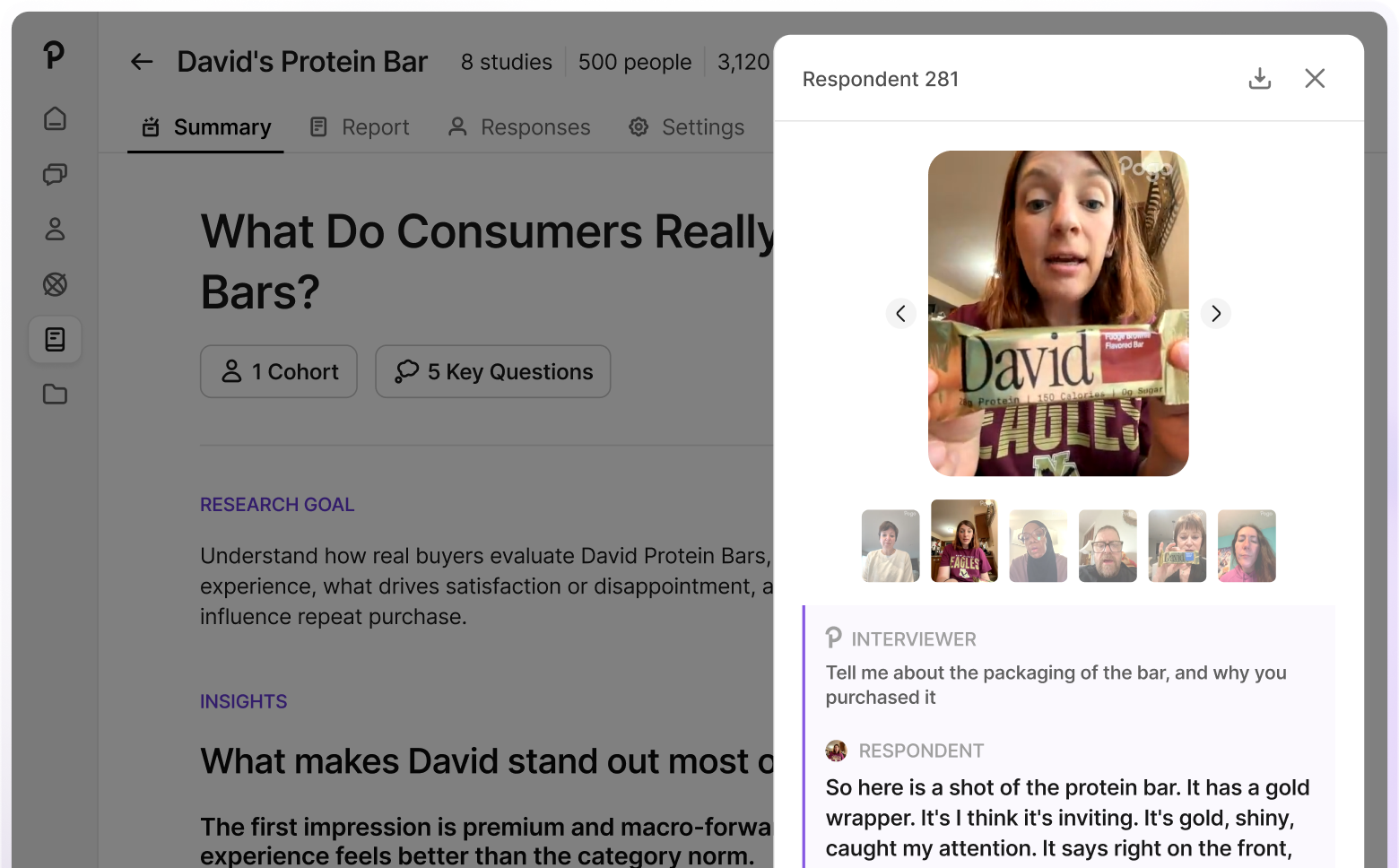
Test concepts, packs, and ads with people who actually buy your category. Every Pogo buyer is matched to card, receipt, and retailer-account data before the study starts. Then ask them why, on video, in the same study.

















Zappi blends sample from multiple third-party panel suppliers and scores each respondent on 14 quality signals. That catches bots and speeders. It can't confirm that someone who says they buy your category actually does. Pogo checks the purchase first: every buyer is matched to real transaction data before they qualify, so a concept score comes from people already in the aisle. And where Zappi's open ends are auto-coded text, Pogo's AI interviewer asks the follow-up question on video, so you hear what drove the score. Zappi's newer tools, the Idea Pre-Screener and Amplify AI, use synthetic respondents. Every Pogo answer comes from a real buyer.

"Pogo enables us to engage verified customers and gain insights that drive smarter decisions."
"Pogo's breadth and depth of data is exceptional, I've yet to build an audience they couldn't find."
"Pogo's blend of competitive basket-level spend signals, along with videos of consumers that humanize the data is a game changer (and a must have for any data-driven marketer)"
Most research panels qualify respondents by answering a screener, so anyone can claim to buy your brand to collect the incentive. On Pogo, every respondent is screened by real card, receipt, and location data before the study starts.
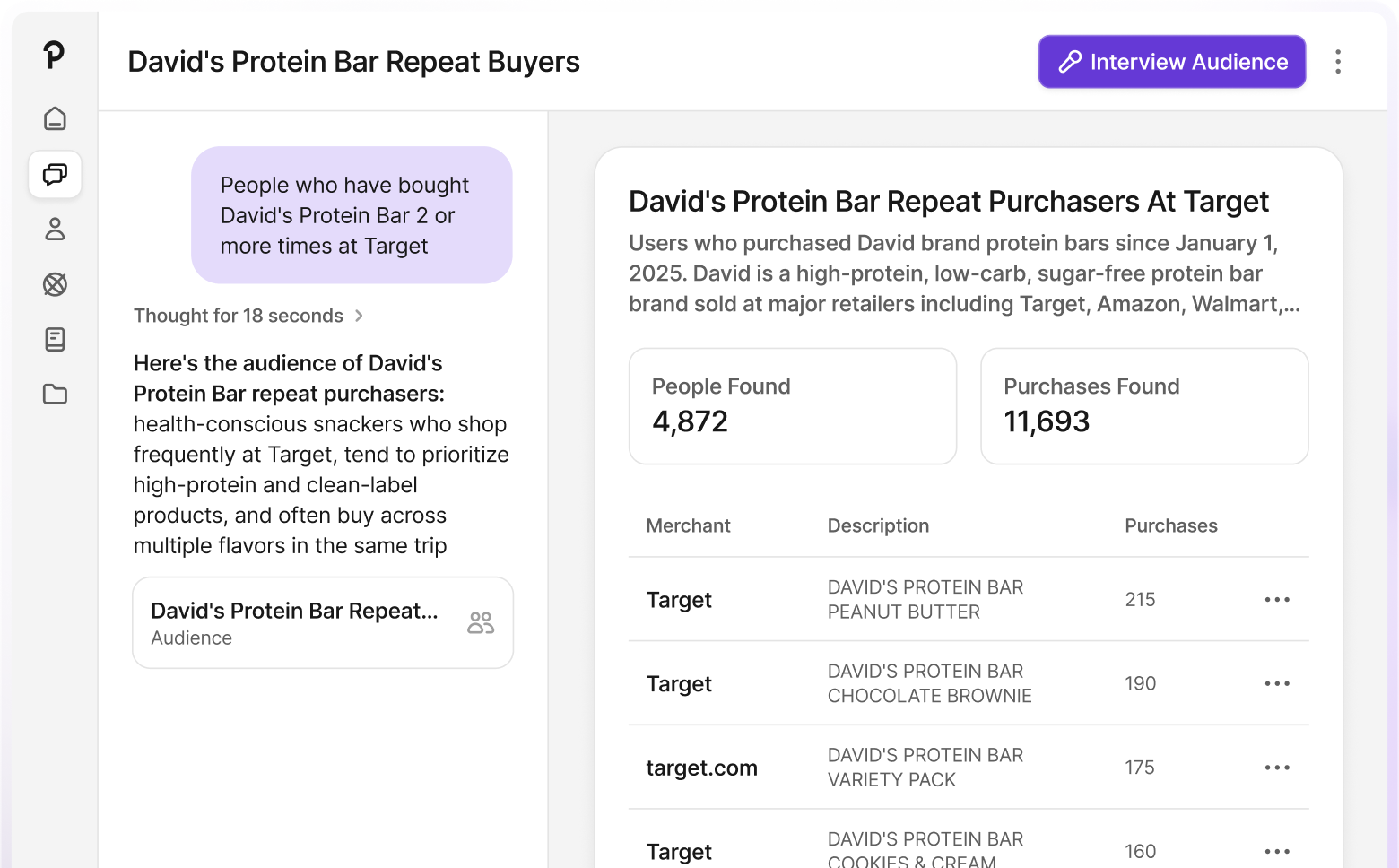
Low-incidence SKUs, a competitor's customers, category lapsers — that's where self-reported panels run dry. Pogo finds them by what they actually bought: brand, retailer, SKU, and frequency.
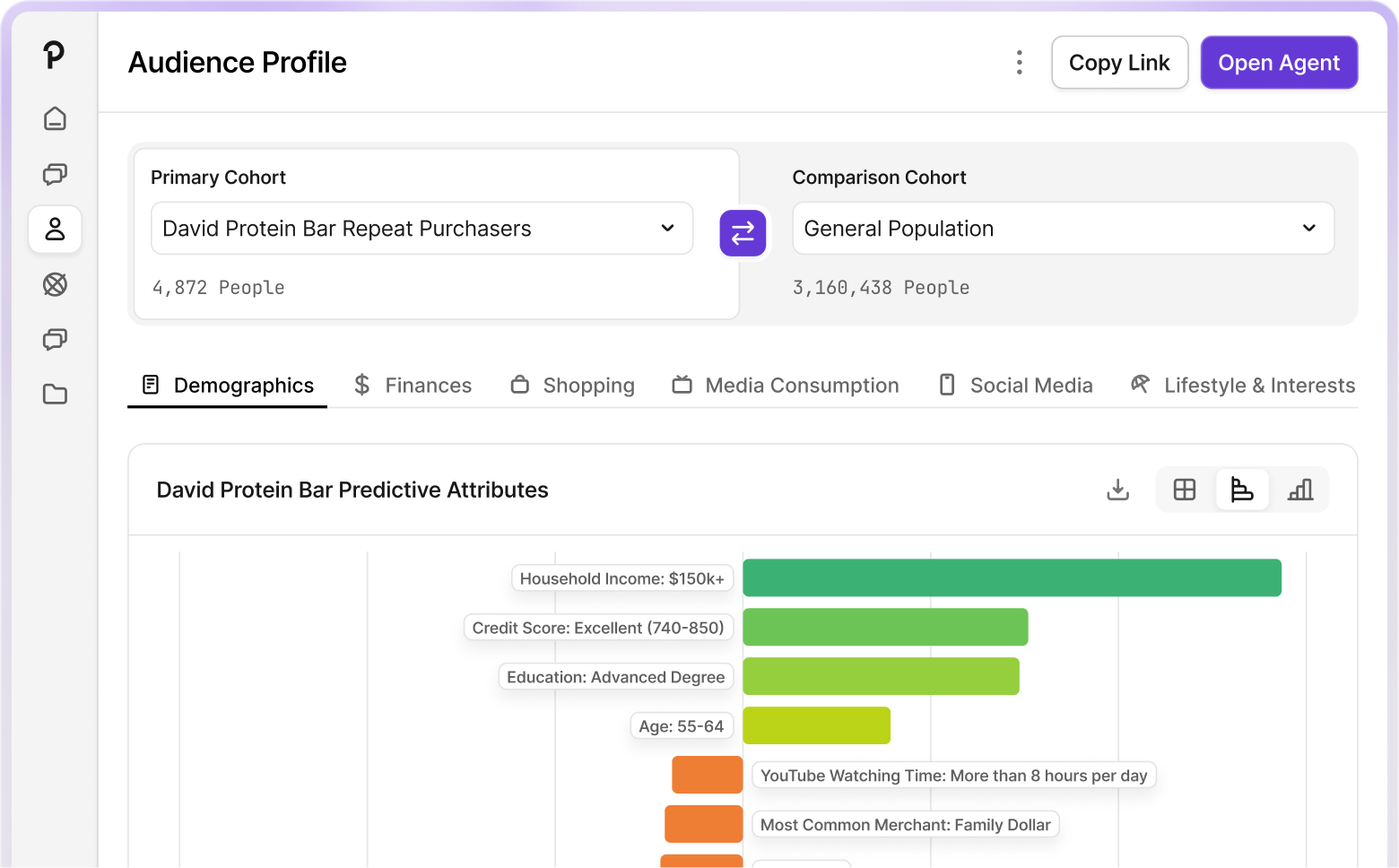
Most tools give you the survey response. Pogo gives you the response and the verified purchase behind it — the receipt, the store visit, the brand switch — attached to the same person, in one study.
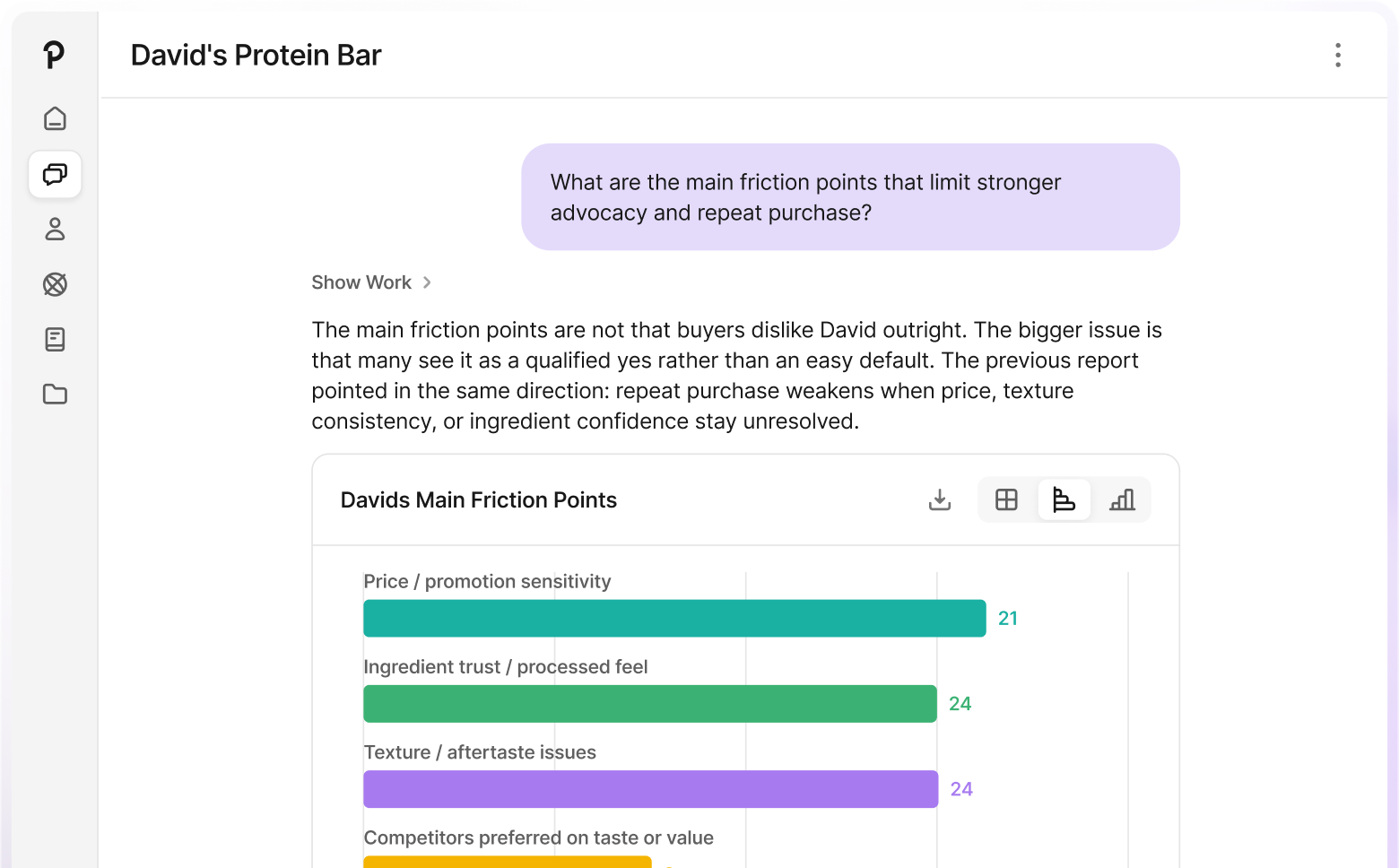
Talk to hundreds of verified buyers on video, in hours. Watch the full interviews, get instant reports, and share the highlight reels in your next deck.
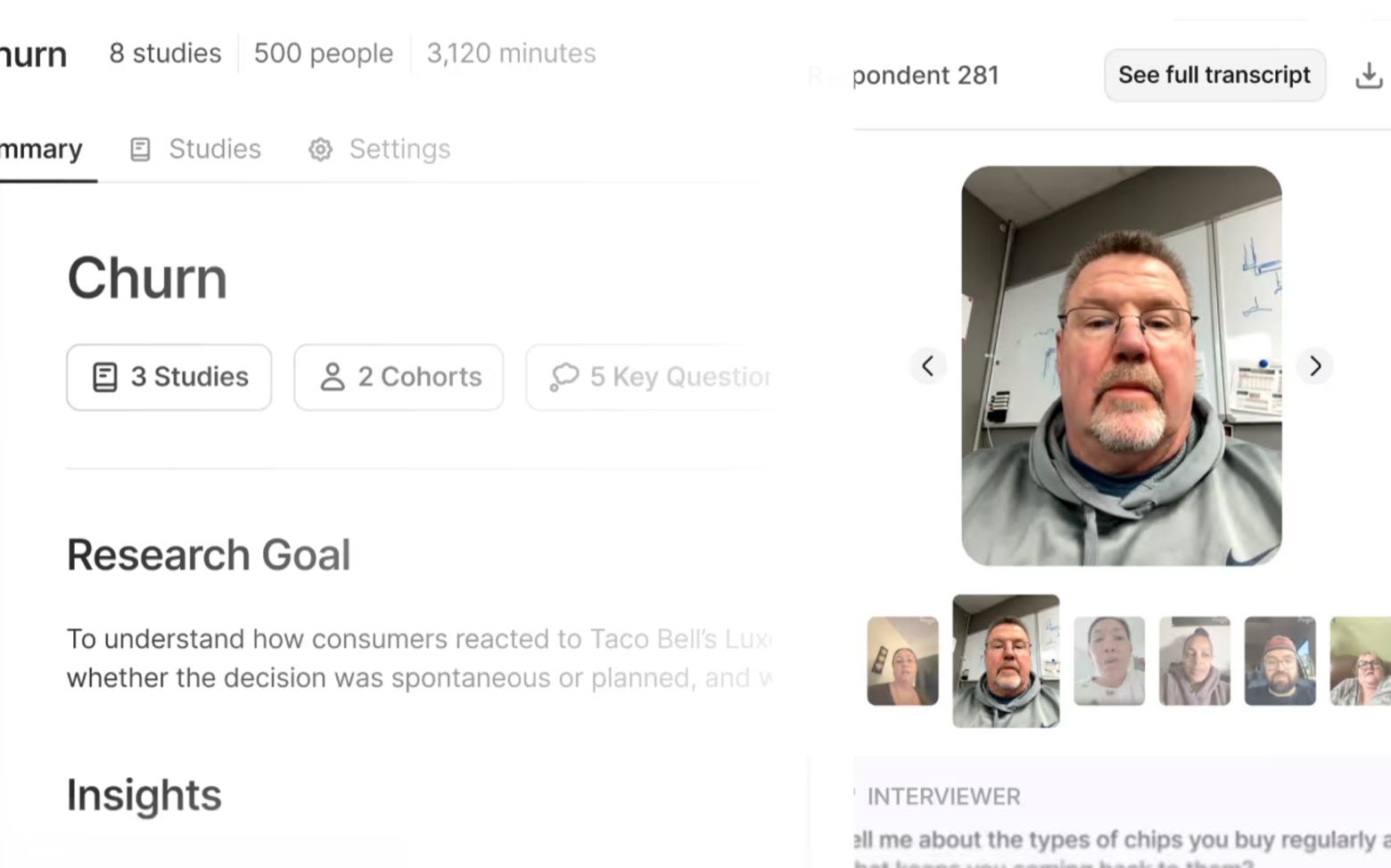

Yes. Pogo runs concept, pack, and ad tests as Quant Surveys with buyers matched to purchase data, then interviews them on video to explain the score. Your result comes from real category buyers, not from a blended panel or a synthetic model.
Pogo matches respondents against real-world purchase signals — including credit and debit card transaction data, digital receipts, in-store visit data, and app usage data — before they ever qualify for a study. That's what "purchase-verified" means in practice: confirmed behavior across multiple data sources, not a single self-reported screener question.
Zappi says it uses multiple ESOMAR- and ISO-certified sample suppliers and scores each respondent on 14 quality signals. Pogo starts from purchase data instead: buyers are confirmed by card, receipt, and retailer-account data before the study begins, so nobody can claim to buy your brand to collect a reward.
Yes. Run concept, pack, and MaxDiff tests as Quant Surveys with verified buyers of your category or your competitors, then interview a subset on video to hear what drove the score.
For some tools, yes. Zappi's Synthetic Idea Pre-Screener and Amplify AI use synthetic respondents for fast, directional reads. Every Pogo answer comes from a real buyer whose purchases are confirmed before the study starts.
Yes. Pogo builds an audience from what people actually bought, by brand, retailer, SKU, or frequency. That includes a competitor's customers, lapsed buyers, and category switchers.
Interviews start coming back within hours of launch, and most studies run end to end in under 2 days, with transcripts, themes, and highlight reels at the end.